One small step for nuclear could mean one giant leap for space exploration, according to this week’s Fissionary guest! Mary and Jordan sat down with Trudy Kortes, the director of technology demonstrations at NASA's Space Technology Mission Directorate, to discuss how nuclear energy is fueling missions to space.
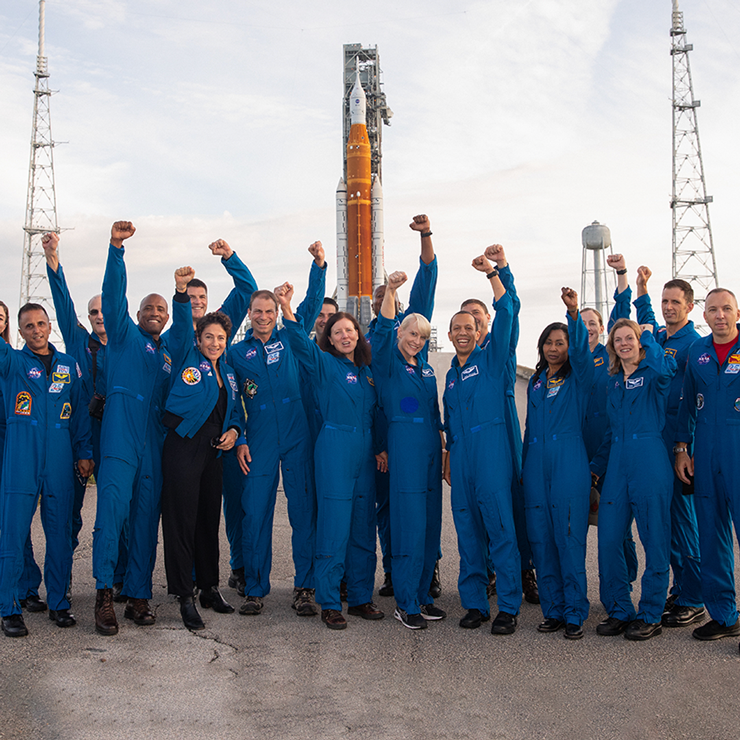
Now that humans have walked on the Moon, our next stop is Mars. Trudy describes NASA’s Artemis program—which will send both the first woman and the first person of color to the moon—as a catalyst to develop future Martian voyages. But these missions present some unique challenges.
For example, extreme temperatures on the surfaces of the Moon and Mars mean that astronauts need a reliable source of power to keep them from overheating or freezing—that’s where nuclear fission comes in. Trudy explains that NASA is in the early stages of developing fission power systems that can be used for space missions as well as Earthside applications.
There's a lot of interest from some terrestrial applications that that are interesting in terms of defense applications. You know, like I said, these are small power systems that you can drop down potentially and use in situ where you need them on a temporary basis. So, there's field applications for these in defense. I think there's mining applications for certain mining types of operations. So, there's a lot of potential partnerships here that are pretty interesting.
On top of her work with NASA, Trudy is a STEM speaker who works with college students, particularly women in STEM programs, through her Leadership in an Engineering Environment mentorship program. She focuses on the importance of things we consider “soft skills”—public speaking, reading a room, interpersonal communication—even in highly technical fields.
I've never once had someone say to me, could you help me with, like, my gas dynamics homework, or my calculus? But they always say, can you help me? I have this one particular challenge that's completely the soft skill size. We call it the soft skills, but they're really not the soft skills, they're the more difficult things to master.
In the near future, Trudy is excited to see developments in high-speed space communication technology that will be necessary once NASA begins sending humans to Mars, as well as advancements in robotics, where nuclear will get a chance to shine. In recent years, Trudy has been helping form the Consortium for Space Mobility and ISAM Capabilities (COSMIC), which focuses on using robotic technology for satellite servicing.
From space exploration to STEM mentorship, the future is looking bright all around!
Jordan Houghton And I'm Jordan Houghton. Let's jump in.
Mary Carpenter Hey, Jordan!
Jordan Houghton Hey, Mary! And hello, Fissionaries, thanks for tuning in with us again today.
Mary Carpenter Hey, Fissionaries, thanks for joining us. We have a fun episode for you today with someone from NASA.
Jordan Houghton We are talking about outer space and beyond with Trudy Kortes, who has spent her career at NASA. And we are able to dive into a lot of different space-related topics, I was really excited for this episode because I love all things space. One thing we talk about is whether we would want to go to space. But I have another question for you, Mary. Would you want to live on Mars?
Mary Carpenter No. I don't think I would make it! I mean, maybe one day if they build, like, nice places to live and there's sustainable food, and they figure out—I'm pretty sure the weather's pretty bad there, you know, I don't think that I could cut it. I like a modern luxury that I don't think has made it to Mars yet. Unless it is there and we just don't know. Like, what if there's an entire Martian community with, like, beautiful resorts and awesome, like, houses? Like, they’re living like the Jetsons. You never know. Then I could go.
Jordan Houghton Like Four Seasons Mars.
Mary Carpenter Yes.
Jordan Houghton Yeah. Yeah, I agree, I don't want to—I would not go I would not live there. You know the, like, the survive the apocalypse things? I don't want to survive the apocalypse. Like, that's not a goal for me. If that happens, just count me out. So-
Mary Carpenter Yeah.
Jordan Houghton No, I don't do again, I think I've said this before, I need nice,, air-conditioned environments. Mars seems to—I watch that—we talk about this a little bit with Trudy, but have you seen The Martian, the movie?
Mary Carpenter Yeah, and see, that's what I'm talking about. I don't want to do that. I totally respect people who do do it and explore all these places that we need to explore, but, like, I'm not cool enough for that.
Jordan Houghton No, me neither. And fun fact, which we didn't even talk about with Trudy, is, like, one of the greatest threats to humans in space is actually cosmic radiation. So, that's like a—that's a huge part of sending people to space is to make sure they're properly shielded from cosmic radiation.
Mary Carpenter Yeah, it's interesting, too, that all of these very wealthy people are putting their money towards going to space, just, like, casually. That's not something, if I was a billionaire, I would probably do. I love watching them and seeing people go to space, but… it's kind of the same for me as a submarine. Like, I don't need to go to space, I don't need to go to the bottom of the ocean, like, I love seeing what they discover, but I'm good on Earth.
Jordan Houghton Fully agree.
Mary Carpenter But it is cool, and I don't know if all of our listeners know, but how involved nuclear is in space travel. It's a big part of, you know, radioisotope-powered satellites that they're building to the military, it's helpful in surviving the lunar night, which Trudy will touch on. There's a lot of different ways that nuclear is, you know, powering, exploring the next frontier.
Jordan Houghton Trudy Kortes is the director of technology demonstrations at NASA's Space Technology Mission Directorate, overseeing critical technology advancements for future exploration missions. With more than 28 years of experience at NASA, she has held key positions at various centers and managed significant projects, including those for the Orion spacecraft and the International Space Station. Trudy, we are so excited to talk to you and talk about space today on Fissionary. I would love if you could just, in your own words, give us a little bit of background on yourself and what you're working on at NASA.
Trudy Kortes Yeah, sure, well, thanks, Jordan, thanks Mary, for having me here today. So, I grew up in Michigan. My dad was an engineer for Ford Motor Company and I always did well in school, I loved school, but really excelled in math and science and, you know, got a lot of encouragement from my dad and, you know, teachers to consider engineering, and that's what my education is in. So I—undergraduate, bachelor's and master's degrees in engineering and, you know, started out with the agency at Johnson Space Center in Houston, Texas doing thermal vacuum testing for anything that we flew in space. We would put hardware or people in a chamber and simulate the temperatures and pressures of space environment. And that was kind of my first start at NASA and from there I went on to manage projects and then ultimately programs, and now I manage a program that's a broad variety of technologies that we need for future missions for future capabilities. And it ranges for anything from entry, descent, and landing technologies, communications technologies, power, propulsion, robotics, autonomy, all kinds of things that we really don't have at our disposal today that that we're going to need to do some of the ambitious plans that NASA has for the future.
Mary Carpenter So, we've heard that you've had a fascination with space since high school. Is that true? And what inspired you to pursue your career?
Trudy Kortes It is. I was a junior in high school in my physics class with Mr. Kropka, if you must know. Everyone loved Mr. Kropka, he was really fun. I can remember doing, you know, certain labs that—physics labs on, you know, friction and coefficient of friction and things like that. And we were doing a lab one day in physics class, and it was in January of 1986 and the Challenger explosion happened. That was in the days when they wheeled in an audiovisual cart, and several people might not know what an audiovisual cart, but basically, it’s a cart with a TV on it. And they would wheel it in and plug it in. And we spent the rest of that afternoon watching all of the coverage of that. And it might sound strange to some people to hear that an event like that was inspiring to me, but really, what I saw in the aftermath of all of that was—I don't know, it just struck me as a professionalism, a resiliency, people who really believed in what they were doing is kind of what I saw displayed to me on TV that day. And my dad, who I—you know, was a really big influence on me. Both my parents were very encouraging. My dad used to always say to me, you know, why don't you really consider going to get an engineering degree? No one can take that away from you. And so, I had been thinking about engineering for a while, but there's so many different disciplines of engineering, I didn't really know which way to go. And like I said, I grew up in Michigan about 30 minutes away from, now my alma mater, the University of Michigan. And at that time, in the in the late 80s, early 90s, Michigan and Purdue would toggle back and forth for, kind of, number one and number two in the country for aerospace engineering. So, it was 30 minutes away. Heavily influenced, you know, by my folks and had a lot of aptitude in those areas, so it was just kind of a natural fit for me. And so, that's usually the story I tell about how Challenger inspired me to go on to get that degree and then ultimately work for NASA.
Jordan Houghton Incredible story. Very inspiring. You grew up in a household that encouraged you to be engaged with STEM, which is something that we are seeing given more focus now. And as part of your work, you have made a name for yourself as a STEM speaker. And I'm curious, what inspired you to become a mentor for STEM education and specifically women in STEM?
Trudy Kortes First of all, I do enjoy public speaking. I know that's not something everyone does, but in high school, I did what's called the Forensics Team, and it's public speech making. And I really did it—started doing it with friends who remain close friends to this day, and it's where I really got comfortable speaking. And it's really a muscle you have to exercise, and then I do it—did it in my first job at NASA giving test readiness reviews. So, I love to speak. And it did occur to me at some point that in talking with college students—I'm on the board at my alma mater, and I would go back and talk to college students—and what they’d tell me from time to time is that they need mentorship, and what I realized they mean by that is, when you go to get a degree in, say, engineering or a STEM field, you will get the technical knowledge you need in spades. I mean, you're going to get all of that you need. But no one really is talking to you about those things that you really need in your career to even just get by, let alone thrive and advance. And those are things like teamwork and collaboration and good communication skills, all of those types of things—how to get along with other people, different personalities. And so, I put together a package called Leadership in an Engineering Environment, and I started giving at different colleges and universities. When I was in Georgia Tech just a few weeks ago, they had a women in STEM type of day, and they actually had students, elementary school students, in an auditorium, and I got to sit in on that. And then they had a broadcast from communication with theInternational Space Station. And the two astronauts, that were there talking to them, two were the female astronauts that are up there right now. And one of them said—this was in advance of my speech, and she didn't see my speech—and she said, what I really wouldn't do is talk to the students, I would talk to the parents. And that really resonated with me and I thought, yes, yes, this is the thing! Parents have such a huge influence on what their kids do, and that was evident, you know, for me in my home life and really kind of steered me with my career. So, I just, I like to get out there. I like to talk to people, see what their challenges are. Inevitably they're going to say to me, a challenge is with team leadership when they're on a student team, or personal—interpersonal dynamics. I've never once had someone say to me, could you help me with, like, my gas dynamics homework, or my calculus? But they always say, can you help me? I have this one particular challenge that's a completely the soft skill size. We call it the soft skills, but they're really not the soft skills, they're done more difficult things to master. So, that's kind of how that all started for me.
Jordan Houghton I love the idea that you call soft skills actually the critical skills, those are the harder ones to master. I mean, Mary and I are obviously nuclear communicators. We work with nuclear engineers all the time who know the engineering and the science in and out. But then when we get them—we have to work with them to learn how to communicate that outwardly in a way that all of the non-engineers can also understand.
Trudy Kortes Absolutely.
Jordan Houghton So, I love that you are bringing that to the next generation of professionals as something they need to think about and emphasize. I think you're going to make future communicators jobs easier, too. So, something else you've talked about—you’re a scientist, you think and you're taught to approach challenges with logic and data. But you've spoken about the importance of listening to your gut instinct, especially when it comes to your career. What does it mean to you to listen to your gut, and how is that helped with your work?
Trudy Kortes I've always thought that I have a good innate sense, I guess, of certain things. Reading people or a situation, I think that's very important to anyone's workplace. I think your ability to read a room, read a situation, pick up—there are all kinds of either subtle clues or underlying messages, you know, that are happening—that really can help you in your career and being able to get a feel for that or have that feel and use it is really important. And it's a difficult thing to talk about, especially at places like NASA or highly technical places that are very data driven and, like you said, logic driven, which they should be, right? In the line of work that we do, we should not ever, for example, take risks in a mission based on someone's gut feeling. That's like—everyone bring data to that situation. But when you're in a personal, interpersonal, dynamic situation, and reading a room gets really important, and it can help you maneuver through your career in ways that surprise me even to this day. But it's just critical. You have to read people, you have to understand people's motivations or try to figure that out. It's a critical skill and not really one we're talking about, you know, a whole lot.
Mary Carpenter So, before we jump into talking about fission, we want to talk to you and hear your thoughts about the Artemis mission. We know it's a historic mission, not only in furthering our exploration on the moon and Mars, but NASA will be sending the first woman and the first person of color on a lunar mission. What has this mission meant to you?
Trudy Kortes Well, it's really a starting point. We're talking about now, the Moon to Mars campaign. And I think the ‘to Mars’ part is really the most exciting part of that, because that's going to be brand new for us. We've been to the moon, but this time when we go back to the moon, we're using the moon almost as like, you know—on Earth, we have different facilities, environments that we can use to test what we're doing. The moon becomes our test facility now. And we're going to be putting certain technologies there to be able to, first of all, demonstrate them, and then use them as infrastructure that we're going to need to prove out first before we go to Mars with those same technologies, which is obviously much further away, much harsher conditions, and be able to survive there and do meaningful, you know, work, meaningful science, meaningful technology development. So, these Artemis missions are a starting point for this longer-term plan, and it's great to see this get going while we have a ways to go.
Jordan Houghton So, in order to properly explore the moon, we're going to need a reliable power source, and NASA's looking at fission reactors as a solution for this. I'm really excited to talk to you about this, because I lived in Vegas for 15 years, and I was there when KRUSTY was tested on the Nevada National Security site. I'm going to let you tell our audience about the fission reactors and where we're at with that process, because you'll be able to explain it a lot better than I can, but I'm excited for you to dig into this!
Trudy Kortes I'm really impressed that you know about KRUSTY and you were out there at the time, that's great! So, you know, this is a technology that's really going to open a lot of doors for us in terms of what's possible in the future, it’s very enabling technology. We're really at the very forefront of developing this, what we call a formulation stage. Fission surface power does come from fission, the fission process, which, you know, works by splitting uranium atoms inside a reactor, or you're generating heat, heat’s converted to electricity. Not a lot of moving parts with this thing, which is good. They're, you know, they're very powerful, they're very reliable. They’re carbon free, clean sources of energy that, you know, they don't rely on solar or wind to operate, so there's a lot of very unique benefits of that type of sustainable power source, which we're going to need to operate in extreme environments, like a lunar environment. Surviving the lunar night is a very difficult thing to do in kind of those regions in space where we can't use solar, we can't have chemical systems, they're inadequate. They're either inadequate or impossible as power sources for extended operations, so we're looking at those types of things to help us really enable kind of those very robust, reliable space operations we need for planetary habitation, for planetary exploration. Whether it's human or robotic, we need that in any location, regardless of environment, and the fission power system that we're looking at is one of those solutions for us. So, it's very promising. They're relatively small and lightweight and very powerful, like I said, so again, very enabling technology for us. But they're new, and when anything, you know, when you have anything new like this, you have to go through a certain process. And that's what space technology my organization at NASA headquarters does. We take usually something from concept through a flight demonstration to prove it in what we call the relevant environment it needs to operate in. It's a means of risk reduction, so you're not using something you desperately need the first time you need it. You need to prove it first and make sure that it's not going to fail. So, like I said, we're in formulation with this, we're in the process of just looking at, what's the schedule we need it on, what funding do we need for it, and then part of my job is to go out and advocate for all of that, for the resources needed to produce this throughout its lifetime.
Jordan Houghton Well, you mentions other applications for the fission technology. I would love for you to talk about what you see happening there.
Trudy Kortes Yeah, so there's a lot of interest from some terrestrial applications that that are interesting in terms of defense applications, you know, like I said, these are small power systems that you can, you know, drop down potentially and use in situ where you need them on a temporary basis. So, there's field applications for these in defense. I think there's mining applications for certain mining types of operations. So, there's a lot of potential partnerships here that are pretty interesting.
Jordan Houghton That's very cool to bring it back from space to Earth. NASA is so good at that, giving us technologies that we end up using here every day!
Trudy Kortes Right. We have a long history of that.
Mary Carpenter Trudy, what's your favorite example of that?
Trudy Kortes Could be dating myself here in saying this, but the—do you remember the BowFlex technologies? You remember the BowFlex commercials and that kind of whole revolution? I think it was in the 2000s.
Mary Carpenter Yeah, of course!
Trudy Kortes So, they're the inventor for that, by the name of Paul Francis, and he developed this weightlifting system that doesn't use weights, so there's, you know—it's compact and it's this resistant weightlifting system. And it was designed then ultimately for use by astronauts using springs and pneumatic cylinders, so kind of adopted from that. And so, that was developed for NASA but was spun off to companies like BowFlex who produced that weightlifting system for people to then buy here on Earth. I don't know how many they sold, but I just remember a lot of those commercials, so, Bowflex. The other one, I would tell you, in that space tech has—had and has a lot to do with is a bunch of different technologies, but a few I'll mention is, is sensor technology. So, aerosol sensors that were developed for aerosol detection for fires, detecting fires in spacecraft. So, we developed sensor technology to be able to detect potential fires, and then we adapted that for human health and an environmental monitoring application. So, wildfire management, firefighting, you know, health and safety, and because of the size, weight and power and the durability of these things, it became evident to NASA after developing these things for a spacecraft, that we could do this for issues on the ground. And then there are other things like materials. There's a material that firefighters—and this again, was developed originally for space—firefighters could put over them to protect them from fires, even if the fire's going right over top. And then we have some autonomous aerial systems that our Aeronautics Directorate has developed for us for monitoring wildfires. So, there's a whole host of things that we can do for wildfire management. But one of my favorite things about that is the agency is really looking hard at being an integrator for all of this, kind of from detection to suppression and then have lessons learned and kind of circling that back to improve these things. Because a lot of partners we work with on this are operational and they're just implementing certain things they need. But to have someone look at the whole system, I think is really important. And we're talking now, like, the Bowflex thing I think is interesting for human health, yes. But now we're talking about saving people's lives with this technology. So, you go from, hey, you need this for a spacecraft, and again, we're doing that there for, you know, human life issues. But now we're talking terrestrial applications and Earth applications to be able to do this, and to me that's—it's really important. And just to circle back really quickly to what I said about this loop, how we do the technologies, how we apply them, and then how we build in lessons learned in that process. I'll say to anyone who will listen, the colleagues I work with at NASA are some of the best systems thinkers and best, like, analysts, just critical thinking skills and analytical skills than I've ever met. And to me, it's a national resource to, you know, as an agency to have people in the whole, you know, aerospace community. Because if you really think about it, aerospace is a system. So, if you can understand that, you kind of understand how to think as a systems person. And I think it's a really critical skill that we need just as human beings in general, too.
Jordan Houghton Really well said, that's incredible. I'm thinking about how bad the last several years of wildfires have been, so you bringing that up is just really poignant.
Mary Carpenter I want to circle back on something that you mentioned, surviving the lunar night. Can you expand a little bit more on how fission can help with that, specifically?
Trudy Kortes Right, so the environments of space and the lunar surface are, you know, extremely cold. When we test things in a chamber that simulates temperatures and pressures of space, you know, we usually cycle it between, you know, something like minus 300 degrees Fahrenheit to a positive, you know, 300, 350 degrees, because you're—you have the sun exposure rate and not the same atmosphere as we have on Earth as on the moon, so you have a lot of exposure there to the sun, so it makes it very, very cold and very, very hot. And then just the extreme low pressures of space. So, surviving that lunar night and the extreme temperatures, that's what I mean. That's what I mean by that. So, if you have a fission surface power system or a fission system that works on the chemical process that I talked about with uranium, then it gives you a sustainable power source that's operating constantly to power your habitat. Potentially, you could have, you know, astronauts living inside. Where, again, it's not dependent on the sun, not dependent on chemicals, those types of things. So, that's what I mean by kind of surviving the lunar night. As well as the equipment, the hardware that you have up there you need to keep warm, that kind of thing.
Jordan Houghton It's making me think about The Martian.
Mary Carpenter Yeah.
Jordan Houghton And Matt Damon, because RTG!
Trudy Kortes RTGs are part of our radioisotope power systems program. MMRTGs, we've flown those for so long, and they're very, very proven. The technology readiness level nine technologies is what we call that, which means they're the top of the levels that we need to prove out. That means they're just flown all over and over again and they're highly reliable, so.
Jordan Houghton What are you most excited about for—in the near future for space exploration?
Trudy Kortes Oh gosh, so many things. I mean, we've been talking a lot about, you know, nuclear power and fission power today, but there—like I said, there's just this broad range of technologies I've had the privilege of working with people on. Optical comm, we have two optical comm technologies and payloads flying right now. One is orbiting—one’s in low-Earth orbit orbiting the Earth, one is on its way out to and past Mars, ultimately. If you haven't seen it, go back to—just type in Taters the cat and go back to a video that we transmitted in December from—it’s—this is the Psyche mission, it's a spacecraft that is headed out to a metal asteroid called Psyche, and we're flying this payload on there, it's whirring right along. We just are along for the ride and they're letting us test out this technology as they go out. So, our goal is to get at least out to Mars and transmit back. And gosh, I think Taters was from 19 million miles away, and we've gone even further since then at higher data rates, high def video to come back. Because as you can imagine, once we put humans on Mars, we are going to need to know how they're doing and we're going to need to know quickly, and so we're going to need very fast communications back and forth with them. So, really excited about that. Also, on Mars, we just had a really successful demonstration of the very first in-situ resource utilization technologies there. What that means is you are using resources you find in place at the time and making something out of them. This was a very small box that we flew on the Mars Perseverance rover that's still, you know, up there, tootling around up there, and this took carbon dioxide and generated oxygen out of it, which is a critical technology for breathable systems for fuel that we're going to need to maybe have—launch from Mars back to Earth to get things back here. It's going to be fairly important. And so that just happened, they had successful runs, met all of their requirements for 99 percent oxygen purity, and they ran even longer than we expected them to, so that was a huge success for us. Robotics and autonomy is going to be huge for both low-Earth orbit and geosynchronous orbit, Mars applications. And robots are nothing new, but how we apply them is. So, just I just spent the last couple of years forming up a consortium. It's called the Consortium for Space Mobility and ISAM capabilities, or COSMIC, which is entirely centered around satellite servicing using robotics and autonomy to do that. Earlier, you know, we talked about Artemis, and of course, we're heavily thinking humans or astronauts, you know, back to the moon and ultimately to Mars. But to do all of that, this is going to have to be a partnership between humans and robots to do all of this. And I'm really excited about that robotic part of it. As much that we can service or maintain using robots on other planets or in space is going to be hugely important for us. So, this consortium, it's all of government, industry and academia getting together to talk about how we further this, what things do we need to do, what products do we need to produce. It's really to establish global leadership in space, servicing assembly and manufacturing capabilities and really making it a routine part of what we do in terms of space architectures and mission life cycles. So, that's a really important effort, we just kicked it off last fall and it's really just getting going. So, there's a lot I'm excited about, and nuclear power is going to be at the forefront of all this, along with nuclear propulsion offer for rapid transit types of applications. So, that's really going to be key to all of this. One of the most key things that we do.
Jordan Houghton Yeah. Thanks for bringing up propulsion, too, because there's a lot of, lot of exciting developments that—you guys are just doing so much cool stuff!
Trudy Kortes We are, we really are!
Jordan Houghton If you had the chance to go to space, would you go?
Trudy Kortes No. But I've thought hard about this! I really would not, I really would not. I'm older, I think, than you gals are, if I might just make a guess at that, and I really enjoy my family life and my kids are getting a little bit older. I have, you know, almost adult kids, one in high school but really, really grown up. And I enjoy other— seeing other people go than enabling other people to go, but personally, do I want to go myself? Not really, unless I was the pilot or the commander. But if I'm not, like, sitting in the driver's seat, I probably don't want to go. So, maybe, I don't know, maybe if I could fly the thing. But if not, I'm not going to sit in the back and be like, how's it going up there? I'd ask a million questions. How are the systems? Are there any warning lights? Do we have to be worried about it? Like, I'm a worrier. So, anyway, I've just told you way too much personal stuff about me.
Jordan Houghton Trudy, same!
Mary Carpenter Me, too.
Jordan Houghton I am very happy to have my feet on planet Earth. Feels great.
Mary Carpenter Okay, I have to circle back to something you guys were talking about earlier, because I'm guessing people are listening and are still wondering, what is KRUSTY? You guys have to give a little bit more background on this!
Trudy Kortes Oh, gosh. It was one of the very first tests that we did of a fission power reactor using this process out in a DOE facility. So, NASA does the designs for these things, but we are not certified to handle any type of nuclear fuel or anything like that. That is strictly in the jurisdiction of the Department of Energy. So, I don't know, Jordan, if you can pull up the KRUSTY acronym really quickly—just the basics of it was, it was it was a ground-based test we did here on Earth at facility out in in Nevada of that technology.
Jordan Houghton KRUSTY stands for Kilopower Reactor Using Stirling Technology.
Trudy Kortes Very good.
Jordan Houghton They got the ‘Y’ from the Y in ‘technology’.
Trudy Kortes Yes.
Jordan Houghton But it was—it's really cool because it was, like, one of the—I think one of the first times you started hearing nuclear come up again in the context of space, you saw the shift—like, NASA was very interested in nuclear technology back in the 60s—and I'm not going to bore everyone with my nerdy history.
Trudy Kortes No, it's good!
Jordan Houghton The nuclear rocket program, which was under development, then they moved away from it and then they started coming back, and so, KRUSTY was really exciting because it was like, oh, we're talking about nuclear again in space, and there's so many good applications, so—and yes, they tested it out in Nevada, which was when I was there.
Trudy Kortes That was really question for Jordan, not me! I love that you know the history, I—that's really, really good. Yeah, and we did get—it's very—comes in cycles. We did get away from it for a while. And even using the, kind of, word nuclear, and then it came back because it's kind of more acceptable, so.
Jordan Houghton We're hoping it's here to stay.
Trudy Kortes It sure seems it sure seems that way.
Jordan Houghton Okay, before we go, we're having a food-centric ending question this season. I know you said you're in DC at your office today. You're—you also live in Ohio. What is your favorite restaurant in the area? You can say DC, you can say the Cleveland area, or both.
Trudy Kortes Okay. You know what? I think I'll do both because I clearly spend more time in the Cleveland area. There's a restaurant there we really love called Pier W, and they've got a great happy hour. It's right on the water. You have a really beautiful view of downtown Cleveland on a nice, clear day. And like I said, the happy hour is really great, and the setting is just unbeatable. So, I really like that one, my family likes that one. Here, let's see. There's a place called Circa, I think at Foggy Bottom or GW? Yes? I like that place. Oh my gosh, Pizza Paradiso, oh, there's so many. Oh, you know what? I'm going to tell you this one because my friend, a friend of mine who has lived in D.C. a long time, introduced me to Lebanese Taverna. She also took me to a place called Au Pied de Cochon, it's the feet of the pig. I don't know if it's there anymore. But we had fun with that because we also went through French class together in high school, and learning to speak French. So, we were just thrilled that there was a restaurant in D.C. with a French—French name to it, anyway.
Mary Carpenter No, we love it! Well, that's great collecting all of these exciting restaurants.
Jordan Houghton So, when Mary and I are in Cleveland next, we're going to do happy hour on the water with you, Trudy.
Trudy Kortes Yeah, that sounds really good. I will make the reservation and we'll go to—we'll go to Pier W for happy hour. How's that?
Mary Carpenter Love it.
Jordan Houghton That sounds amazing! Great conversation with Trudy. We're going to have to have her back at some point. There's so much more to talk about with nuclear in space. If you are interested in learning more about any of the NASA programs Trudy talked about today, visit NASA's website, and if you want to learn more about Trudy and her work, her website is linked in our show notes.
Mary Carpenter And don't forget to rate and subscribe to the podcast on Apple or wherever you get your podcasts. Thanks for listening, see you next time!
The next episode airs on Thursday, June 20—make sure you tune in, Fissionaries!
Sign up for updates and new episodes: