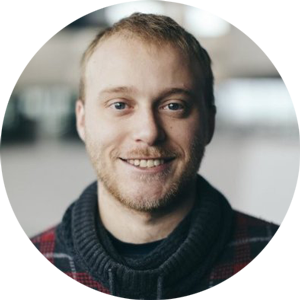
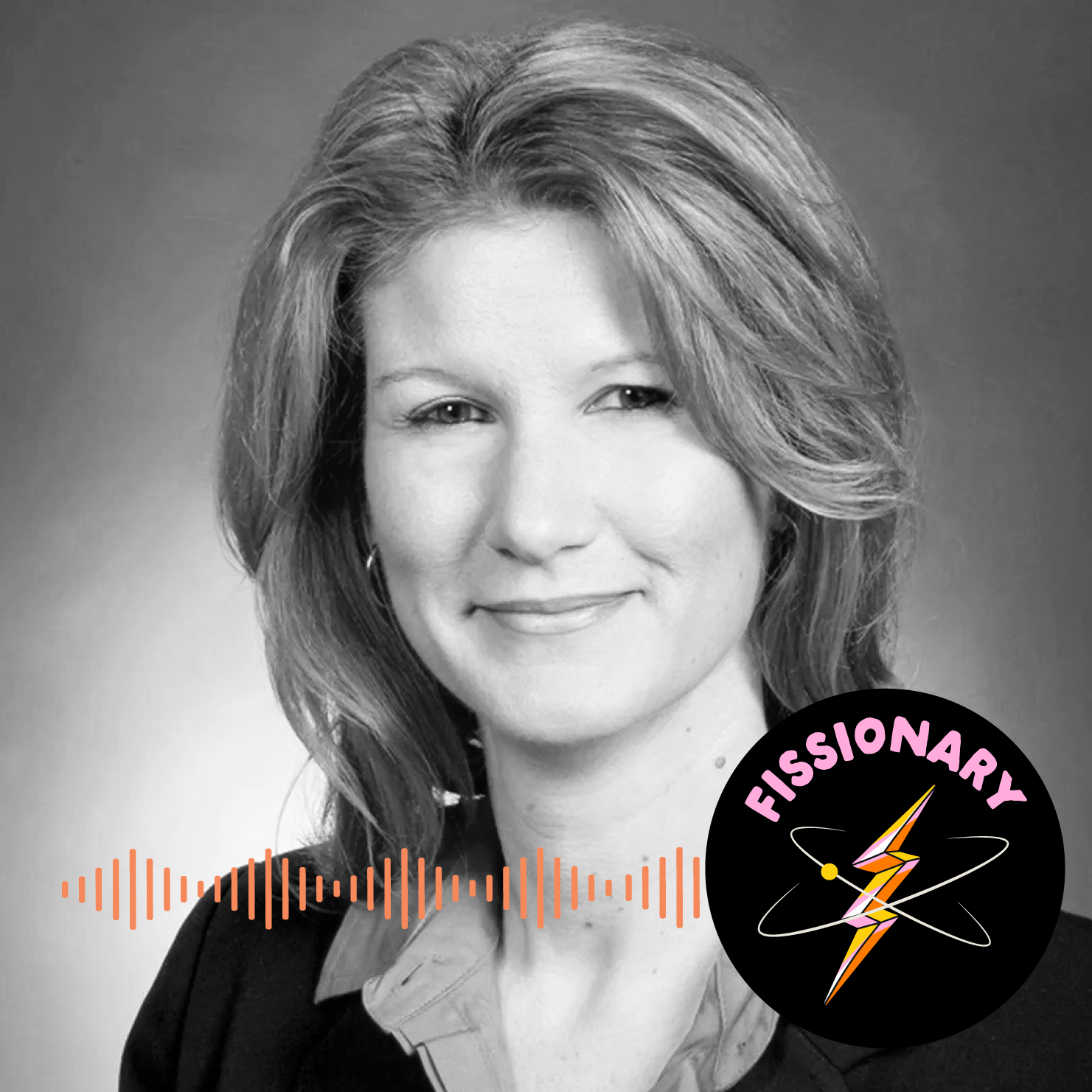
There are so many famous families in pop culture and politics; the Beckhams, the Kennedys, the Hadids, etc. The list goes on and on. However, there’s one family name whose impact on the world may far exceed most others: Oppenheimer. Even though that name wasn’t necessarily a household one until the summer of 2023, its legacy spans from the 1930s until now.
In this episode, Charles Oppenheimer, the grandson of J. Robert Oppenheimer, spoke with Mary and Jordan about his last name, his grandfather, and his work in nuclear today. He was a little surprised, though, by the popularity of the movie about his grandfather.
It was kind of a surprise to me that it became such a big movie, and then the movie really did much better than, I think even Christopher Nolan, or certainly my first impression of it was, so it has made an impact in terms of, like, general recognition. Going into a restaurant, giving your name, somebody will make a joke about the—you know, there's just much more general recognition of the name. It used to be kind of, like, specialists who knew about it.
Charles is building a legacy of his own with The Oppenheimer Project. In this episode, Charles reflects on seeing his grandfather portrayed on the big screen, funding a nuclear future, and the importance of distinguishing between nuclear weapons and nuclear energy.
When it comes to the Oppenheimer movie – outside of providing him with some “pinch me” moments – Charles thought it did a good job of portraying his grandfather’s thoughts on nuclear energy and nuclear weapons. He thought that the association between nuclear weapons and nuclear energy has been hurting the energy movement.
He viewed that the kind of cooperation that we needed after the war to cooperate around fissionable material, that if we did that right, we could have the benefits of nuclear energy. And if we didn't do it right, it was going to really threaten the promise of nuclear energy as a good source. What we ended up having is a terrible, dangerous arms race. And that association with weapons is probably one of the primary things that has held back nuclear energy abundance from where it should be.
Charles wasn’t always the biggest nuclear energy advocate, but over time he grew to become one. Like many people, he used to think it was dangerous and that the risk of catastrophe was too high. However, also like many people, the more he learned about nuclear energy, the fonder of it he grew.
Nuclear energy is such a large scale, like it could potentially produce enough energy to solve all our problems...Then when I looked into it, that's where I was kind of shocked at what I found, where it did not match my expectations at all, that it actually wasn't dangerous and it was effective.
This episode goes to show that the path to being a nuclear energy advocate can begin from any number of places. You could be a coal miner, a podcaster, or the grandson of a world-renowned physicist who had a blockbuster film made about their life.
Mary Carpenter This is Fissionary, a show exploring how nuclear powers your world. I'm Mary Carpenter.
Jordan Houghton And I'm Jordan Houghton. Let's jump in! Hi, Mary!
Mary Carpenter Hey, Jordan! And hey, Fissionaries, thanks for joining us today. Excited to share that Fissionary is officially a little bit late but joining the Barbenheimer trend in this episode.
Jordan Houghton That was such a moment last year!
Mary Carpenter It was a moment.
Jordan Houghton It was. I am really excited that we have our Oscar-worthy episode today, talking to Charles Oppenheimer, who is the grandson of J. Robert Oppenheimer, and we definitely talk about the movie, which, did you say—you saw the movie, right?
Mary Carpenter Yeah.
Jordan Houghton Great movie, won seven Oscars. It's just so wild to see a movie about this topic have become, like, so popular. Obviously, Barbie is like a huge cultural thing that I feel like everybody understands and touches. The Manhattan Project is a little bit more niche.
Mary Carpenter Yeah, but I think they did a great job of, you know, marketing and getting the right people in the film and really making it interesting to the general public outside of just people are interested in, you know, nuclear in general. You know, this is more about nuclear weapons, but still brought some buzz to the nuclear energy industry as well, which is exciting. And, Charles, we speak to him a bit about how important it is to make that distinction between nuclear weapons and nuclear energy. And, you know, how he—he shows us how he became a big advocate for nuclear energy as we're talking to him in this episode.
Jordan Houghton Yeah, I feel like that was an interesting decision because he had but a quieter life prior to the movie, and I actually admire him a lot for deciding to stand up and use his voice to support nuclear. And I like the idea that he talks about—in order to solve the climate crisis, we really need a Manhattan Project-level effort to make it happen, and nuclear is a huge piece of that puzzle.
Mary Carpenter Yeah. It's fun to hear him talk about how his involvement in the movie, and the celebrities he got to meet, and it's really, really interesting that the producers and the director of the movie went to the family, you know, and asked for help to make sure that they were doing things right. So, it's interesting to hear Charles talk about it.
Jordan Houghton Yeah. Let's get into our conversation with Charles. Charles Oppenheimer, grandson of the renowned physicist J. Robert Oppenheimer, carries on the family legacy with his own notable contributions. He is the founder of the Oppenheimer Project, which is an organization honoring the legacy of J. Robert Oppenheimer and advancing a safer future in the face of technological change, and founder of Oppenheimer Energy Ventures, entities dedicated to tackling existential risks with a primary focus on fission technology. Charles, we are really excited to have you join us today. The Oppenheimer name has always been well known because of your grandfather's scientific contributions. But, first question, did you ever think it would be Hollywood big? And what has that been like for you?
Charles Oppenheimer Yeah. To some extent it's, you know, continuation of things that I'm used to, people talking about the family, but specifically, a Hollywood-type movie had been mentioned in the last 10 years and I thought, you know, I don't know if that's a good idea, it doesn't seem generally interesting, so it was kind of a surprise to me that it became such a big movie, and then the movie really did much better than, I think even Christopher Nolan, or certainly my first impression of it was, so it has made an impact in terms of, like, general recognition going into a restaurant, giving your name, somebody will make a joke about the—you know, there's just much more general recognition of the name. It used to be kind of, like, specialists who knew about it.
Mary Carpenter So, were you involved in the movie at all? Did you help provide any, like, background? Kind of, what was your involvement with that?
Charles Oppenheimer Not technically involved. The movie was written off the script or based on the book American Prometheus, which is this giant book, so by the time I talked to Christopher Nolan, he had really written a full a script around it. Matter of fact, it was way over three hours, and he explained how he was trying to cut it down to 3 hours to have any hope of getting it made. So, you know, we had a good long discussion about our respective views on Robert Oppenheimer. I really was impressed with his scholarship and how much he had looked into it, but there wasn't any kind of direct control from the family, which I think people sometimes find surprising, because somebody so close to you, you know, your relative and your family member, and other people have the right to completely talk about them, and you don't have any input. But that's the situation when people get to a certain level of historical and public figure that Robert Oppenheimer was.
Jordan Houghton So what did you think about your grandfather's portrayal in the film?
Charles Oppenheimer You know, the movie was really well done. His portrayal, since we asked that very specific thing, was done in a very kind of neutral way. That was the intention of Nolan, where he was trying not to—like, if you watched it, you couldn't quite tell who the person was. And I think that that was effective. They were able to tell this story with kind of artistic tools and the scope of history that really drew people. And the hard part of it, it was, you know, he's also a real person, and he happened to be, like, a really special person and like, famous all this really, you know, individual character that I didn't know personally, but I know so many people's impression, how much—how warm he was, how much they loved him. And of course, all that gets lost in a fictional portrayal. You can only do so much with art and recreating somebody. So, you know, in general, I think they did well. The focus on the security hearing is stuff not that many people knew about Robert Oppenheimer, and then these days, even less knew about that, that period, even though, was very much front page news and a huge deal when it happened. By this—this many years later, not that many people knew about it, so Nolan making that the narrative arc of a man who accomplishes a great thing kind of gets attacked by his country was effective, apparently, because people—a lot of people watched it.
Mary Carpenter So, it sounds like you thought the movie was historically accurate, but it didn't really capture your grandfather's personality. Is that accurate?
Charles Oppenheimer You know, it is based on American Prometheus, which has mostly, you know, historical, accurate things, a few embellishments that was intentional, and when I talked to Nolan, he said, you know, we're going to have to make some changes to the historical thing to, you know, make it a good story, and I actually could accept that pretty well. I think, you know, you can only capture somebody's, like, unique personality so much. They did a good job. I think—I found a lot about the power of Hollywood people, still, I didn't really understand that fully. Or when I—before this experience where people think it's so important that Cillian Murphy, an actor, played him, and I'm like, well, my grandfather's just as important to me. He was the real guy who did the real stuff, so—but, in modern terms, if you're a Hollywood star, that's like, much more powerful, so that's just a fact that Hollywood has a lot of influence and impact, and I think try to use that, where possible.
Jordan Houghton So you just mentioned Cillian Murphy, as you were going through the process of this film getting made, did you get to meet anybody that was really like a ‘pinch me’ moment?
Charles Oppenheimer I did meet Cillian Murphy. I walked onto the movie set and bumped into him as they were filming in New Mexico, and he looked at me and he's like, this is weird! So, that's like a pinch me moment, that's what I always say, because it's just like—you're sitting around and talking about these Oppenheimers and then me and my uncle show up on the set, so we were the celebrity visitors for the day. But, you know, I mean, that's that that is the thing about being related to a famous family. You take some of the fame, and like—all this, like, ‘oh my god, a famous person!’ with a grain of salt because you know that we're all—we're all just people actually, like, you know, it's a representation of something that seems like amazing and different of a famous person, but I've been around it enough to not be overwhelmed by that. Although I will say, around the Oscars time, that was a new level of, like, Hollywood hierarchy stuff. So, I was not invited to the Oscars, which makes sense to me because I didn't make the movie. It's really an award—but I was in Hollywood at the time, got invited to another party, and there's, like, a little, you know, area of, like, the famous actors, including the ones that came from the movie who are over in this area, and they're in the walled off, like, exclusive area, and then there's family members or just some people, you know, not really related to the family standing around, so there is there is a Hollywood thing around, you know, fame and publicity that sometimes is impactful when you encounter it.
Mary Carpenter So, I'm curious, obviously, there was a lot of news around this, it was all over social media, I mean, it got a lot of press. So, even if people didn't see the movie, they were still very aware of, you know, the story and what was going on. And, you know, I know this is obviously—the movie's more about nuclear weapons, but how do you think the movie put a spotlight on nuclear energy? Did you—do you feel like there was any connection there?
Charles Oppenheimer Well, I've really reached and put all my effort into making a connection. I think it really certainly did not come out of the movie. You know, even my grandfather's thoughts around nuclear energy is that he viewed that the kind of cooperation that we needed after the war to cooperate around fissionable material, that if we did that right, we could have the benefits of nuclear energy. That's what he said directly. And if we didn't do it right, if we had the problem of an arms race, it was going to really threaten the promise of nuclear energy as a good source, and I think, couldn't have been more accurate about that. What we ended up having is a terrible, dangerous arms race, and that association with weapons is probably one of the primary things underneath the covers that has held back nuclear energy abundance from where it should be. So, it's really an unresolved issue, and my effort is to talk about the two things and how they're related and get as much information out, and advocating nuclear energy not being the same thing as nuclear weapons. But it doesn't happen automatically from watching that movie. That's where I really have to take an active role to get out there and make that association.
Jordan Houghton I think it's interesting because it was about a year ago, almost May of last year, buzz was starting to build about the film coming out, and I think people in the—exactly to the point you just made, people in the nuclear industry are always nervous when something like this comes out, because it's like, is it going to impact the industry in a negative way? Is it going to change people's perceptions? But just about this time last year, you published this op-ed in Time magazine. That was like when you first came on my radar, and I was I was like, oh my gosh, here is an Oppenheimer that has come out and said nuclear energy is what my grandfather would have wanted his legacy to be, and the path forward, and I just I give you a lot of credit for taking that step because you came out and like, put yourself on the stage at that point, to be sort of a poster person for nuclear.
Charles Oppenheimer And it also went viral, that was fun!
Jordan Houghton Yeah!
Charles Oppenheimer All in all, it was a good experience, yeah, so that was mainly due to the fact that Elon replied to it. I got a real taste of, like, the power of Twitter media. You know, it was a Time Magazine article, which is great when you get published in Time, has a huge reach, but you might have like 25, 100 likes on most Time tweets. Elon replied to my article tweet, or actually Time's tweet about the article, saying ‘I think we need more nuclear energy too’. And then you had hundreds of thousands of likes and comments. And so, you know, everybody should lend their voice to the space, and I think—I was really glad I could take advantage of that.
Jordan Houghton I know. And I was going to I was going to ask you, were you anticipating that response when you did that piece?
Charles Oppenheimer Well, I was certainly hoping for it. You know, like, I think I think that's changed over the years is that, it used to be pretty hard for me to think about publicly talking for my family. It just is a really weighty thing, and I have the experience my entire life of, like, every word my grandfather ever said, and every picture of him is in a—books, and people discuss it and dissect it and make new stories. That doesn't mean I'm against publicity, but it just felt like a really big deal and really weighty to talk about anything. And so, that article was an example of me changing that pattern and it, kind of a progressive path of me like being more and more willing to speak out about the family values, but it wasn't—not a native thing for me to do and something I've experienced, so I was hoping to have an impact. And then it went better than expected. And I think that's really related to the appetite that we have in the world now for nuclear energy. The zeitgeist has shifted, and people want to hear that message instead of the old one, really.
Mary Carpenter So, what got you interested in nuclear energy in the first place? Was it, kind of, your family background relation to nuclear, or was it something totally separate?
Charles Oppenheimer I was interested in it in the past, but I kind of just had a vaguely negative impression of it. Like, just like most people like, well, I think it's dangerous and it's probably not good stuff, it's bad—like, that's effectively where I classified without any deeply—deeply looking into it, not in my own perspective, just association kind of with weapons and stuff. And when I started thinking about the climate change catastrophe or threats from climate change and energy poverty, I thought, you know, a logical—like, if we were going to be serious about that effort, could we do Manhattan Project-level effort? Like, that kind of calls to me that—I know that from my personal working career and I certainly my family's history of Robert Oppenheimer. When you really want to do something, you can make it happen. And sometimes when it's almost impossible, like, World War II with unknown physics, but in just general business, there can be a bunch of people standing around saying, ‘no, we can't do it, it doesn't meet the timeline,’ or you can actually make it happen. You can set that date and make it happen. I'd done that in business, so when I was thinking about the climate issues and energy poverty, it just seems like there's all this work around the edges, like some other people should change their behavior and we should do these little incremental things, but not really solve the problem. So, I thought, you know, just based on the science, nuclear energy is such a large scale—like, it could potentially produce enough energy to solve all our problems. That far I thought about nuclear energy, and then when I looked into it, that's where kind of I was kind of shocked at what I found, where it did not match my expectations at all, that it actually wasn't dangerous and it was effective, and it was just so far off that my impression that, like, a lot of people got sucked into the rabbit hole of saying, well, if this is—why are we not doing that if it's not anything like the portrayal that I had heard about it?
Jordan Houghton Very excited to have you on the team.
Mary Carpenter Yeah!
Charles Oppenheimer It’s been great! Everybody's welcome here at Oppenheimer nuclear energy.
Jordan Houghton We're like, come on in.
Mary Carpenter Yeah, bring everybody.
Jordan Houghton It helps spread the good word. So, you founded the Oppenheimer Project. Tell us a little bit about how you've come to decide to be public with your family legacy, but talk a little bit about what the Oppenheimer Project is doing and what where you want to see it go.
Charles Oppenheimer Sure. I mean, it was founded out of discussions with the Department of Energy, where they founded the Oppenheimer Science Leadership Program in 2016, roughly, end of the Obama administration, and asked for family permission to name it that. And that kind of got me thinking about, why does the family not have our own representation of Robert Oppenheimer in any format, and is there anything that we can do to speak for him? But it was, like I described, hard to do—drive a path from just having an organization to, like, what do you do with it? How do you make the maximum impact? The movie, when I saw that coming, I was like, well, this seems like an opportunity. Obviously, that's a big brand advertisement. If I want to talk about the family values, there's a good vehicle for doing it. And kind of like the roots of the organization, both the Department of Energy came effectively from our, you know, the Manhattan Project and Robert Oppenheimer's leadership, and then this Oppenheimer Science and Leadership program. I've had maybe the closest contact with the Department of Energy, where during the movie opening, for example, we had a colloquium with four lab directors and a hundred lab scientists and bring in—brought in investors and venture capitalists. And so that ability to kind of like convene people, especially from different walks of life, like, a lot of those lab scientists said, wow, I've never sat in a room with a venture capitalist looking to invest in nuclear energy, and vice versa. If you're an investor, you're not always talking to rocket scientists, you know, so that's kind of what the heart of the of the organization is. Can we get people together around these really big problems, kind of promote the idea of big science applications to big problems? And in my case, it is transmitting Robert Oppenheimer's words and values, which I think are directly transmittable to today. We can take that solution to this extremely hard problem. What should we do with fission energy, should we have wars in the world and, like, implement his advice? So, I view that as a big asset I can talk about. I can look back to his words, his advice, his policies, example, and we can all use that as, like, a reference of how we should deal with the problems in the world. And so, those are two convening things, but I also believe that that should transmit into the business world. How can we use that impact and that discussion to actually cause more energy to happen in the world? And that's where kind of Oppenheimer Energy Ventures comes from.
Mary Carpenter Do you think the attention around the movie helped draw support for the work you're doing with the Oppenheimer Project?
Charles Oppenheimer Yes. It's like a billion-dollar marketing campaign, I like to call it. You know, it's made a huge—a big difference because I was never a public figure before. I didn't consider—I did actually do a fair amount of public speaking for my work, software-type work. But now people think that I'm a public figure and I'm happy to, you know, fulfill that role, it’s, of course interesting, and—but yeah, it did help. Has helped.
Jordan Houghton I think that you bring up a good point. We didn't go too deep into this, but you are not a scientist, you have a business background, a finance background, and I think that that makes your intersection with nuclear really interesting, because one of the things that nuclear needs right now is capital investments to deploy more projects. So, let's say you're talking to a potential investor, what is it about nuclear that makes it a quality investment?
Charles Oppenheimer Yeah, that's the billion-dollar question, really. So, what I found in exploring the field is where the majority of the capital and the investments are in the early stage tech development area. So, if you're a scientist or say, a startup and you're working on a new reactor, there's a whole market, including the national lab systems, which are kind of generally there for early science and supporting you, grants, and then the venture capital market is able to make a bet on early-stage tech. And with a venture capital bet, you want an exponential return. You're hoping for the next Google. You invest in that company, they make a million of these units and you make your money back. But it's not—it's not like a bond, like, you know, steady, very clear return. And when I looked at the field, I found that there's enough of those projects in flight that that's not really where we need capital right now at this stage of the game, with me getting involved in 2023, it was basically when I looked into it. What we really do need is, kind of, project finance and infrastructure level investing, which in the world of capital markets is a much, much larger sector of capital than venture capital. Venture capital is actually a small little sliver that takes risky bets and the big money in the world from institutional investors, sovereign wealth funds are looking for big projects with a steady rate of return. And so, nuclear is good in that sense, like there's larger projects that can match large investors’ appetite. The problem is the risk around them. You know, if you're getting only five percent or ten percent return a year, which is pretty good for some people, you don't want that to be zero. So, that kind of risk-return on a nuclear energy project is the big question, and how can we de-risk those parts so those larger pools of capital can come in and expect to get their money back. And I think there's a big opportunity in that area. When you said speaking to a potential investors, a lot of that capital, that risk capital, the first 20 percent of project is not at the table and therefore moving into it now, obviously before everybody in the world does, has some advantages.
Mary Carpenter So you've spoken a bit about your emphasis on collaboration and unity around fission and the work you're doing at the Oppenheimer Project. How can we encourage collaboration between various stakeholders like governments, industries, financial institutions that you were just talking about?
Charles Oppenheimer Yes, well, there's a there's a number of ways. Also, politics, I find nuclear be quite a bipartisan thing. It satisfies, you know, climate and carbon goals and energy goals on the traditional left side and, of course, energy production and financial aspects on the right, so it really does seem to be a unifier. Related to your question, there is so much need for a catalytic project, because what I've seen in the industry and you guys probably see this a lot, is there's a lot of talk about nuclear. There's a ton of excitement. There's much less projects actually happening, those megawatts getting built and going on the grid, and we have to get to that stage for it to matter. And the coming together around a project like that really requires that group of people. For example, if we're going to do a new nuclear build, utilities have a really important place at the table, like, they have the only place at the table traditionally, the only people build nuclear, so you could easily build a project that as a utility as a main customer. There's new classes of buyers, like tech companies and industrials, who will pay a higher per megawatt hour to sweeten a deal. There's new classes of startups and developers who, as their whole business model, develop projects. And you can pull those together and cause a project to happen. Matter of fact, lack of that, and just pointing at one party, like, the government saying, ‘hey, utilities, go build a nuclear plant,’ and they say, ‘well, we don't want to, it's more risky’, that's not a way to go forward. Coming together on a specific deal where each party is bringing something that table is, really practical. Like, I think that's how we will get the next project on the table.
Jordan Houghton So, when you're when you're talking to these groups of people, you mentioned risks. What do you say about mitigating the associated risks?
Charles Oppenheimer Yeah. Well, to a sense, we're all kind of the nuclear crowd, I'll talk about the risks I'm talking about, which is certainly not, you know, radiation and nuclear waste, things that have never, yeah, you know, nobody's been injured by nuclear waste in the U.S., ever.
Jordan Houghton Right.
Charles Oppenheimer So, it's not really that it's financial risk and the reduction—the thing that works every time is, kind of, building the same technology over and over. That's—for every large industrial project, it’s the way you reduce risk. You start with, you know, one design and plan and it doesn't go exactly to plan, but you fix some of that and you can bring the costs down. Unfortunately, we have a history at nuclear energy of not doing the same project over and over, constantly changing it. So, to some extent, we could look at right now where we are in the world, what is the furthest along and been most risk by being built it all, or further along the licensing scheme and trying to get behind some of some of those projects. And the more information you have on being built once it's not—it doesn't—it means that not every reactor company in the world is going to win. You do need to narrow down on some that that have proven themselves. And then on the capital side, there's kind of a more straightforward way utilities have been asked to take on the full risk of a nuclear project, and they're so big they can actually take down a utility company. That is not a great prospect for a builder of a nuclear project. So, you know, the model of building much smaller projects is one thing that industry has—has coalesced around small modular reactors. I'm also a believer in, like, doing a project with a utility where they don't take all the risk on and you move it off their balance sheet and you bring other financial risk takers into the same project, actually removes the financial risk. So that I think that's a really promising model.
Jordan Houghton You mentioned a lot. We're not building a lot here in the U.S., but in other countries they are building more. What do you see as the difference between other countries and the U.S., and what does the U.S. need to do to deploy at a similar scale?
Charles Oppenheimer The examples of the best building in the world have had a really strong state sponsorship element. I mean, I guess that's arguable. In the U.S. has the largest deployment of nuclear reactors in the world. We still have the most ever. And that wasn't a full government deployment. Matter of fact, it was driven by utilities with some government public-private partnerships. So, that's a model that worked when there was a big appetite on the private side, the modern version of that. Then you have France in between, where a very heavy state sponsorship with a public-private focus, but then a real focus on saying we're going to make one decision on one reactor type and build it over and over 50 times. That is proven to be the most effective to truly scale in the U.S. and of course, so China—China right now, just because of their scale and their construction productivity, and Korea is similar where they have increasing construction productivity. There's places in the world with increasing—and they have an easier time building with a combination of state sponsorship and construction productivity. The West, generally everywhere in the Western world, has been decreasing in construction productivity, it's not just a uniquely American problem, it's in Europe, it's in every developed economy. Construction productivity goes down for large infrastructure projects. That creates huge problems. So how do we address that? There's a million great ideas. I have a particular bias towards—what are the exact tools that are available as of today, right now, without reinventing the world or changing anything in the world, what can we use exactly that's at our hands? And I think that— taking into action with things like the IRA, IRA tax credits, existing license reactors, and the amount of support to get any project on the books would have a huge catalytic effect. And if we can get one project going, I think that's where we start saying, you know, do we want to build five more of these or ten more and change industrial policy? But sometimes I see the industry kind of stop in this theoretical way. What can we do to build 20 reactors? And my startup brain says, well, you need to build one before you get to 20. Like, can we get a project going with our existing tools? So, I'm kind of a fan of that, that we can take action now in the existing environment without a bit of legislation change or even, frankly, a new technology developed, we could do something now.
Mary Carpenter So, beyond that, what do you think the industry should be doing right now to bring in new investors, new supporters, get that support from Congress, you were saying? What should be happening?
Charles Oppenheimer Well, I mean, the kind of effort to produce a backstop legislation that would protect cost overruns for a nuclear build would have the most catalytic effect. If that goes into place, that does take, you know, bare minimum, a year of legislation, appropriations, god knows what needs to happen. But we should look at system changes like that, and, you know, it's been worked on and that should happen. As a capitalist, I'm looking at trying to drive a deal right now, you know, as soon as possible by bringing private capital into a deal with a utility and some other partners. That's not the way utilities are usually used to doing business. And so, by offering that and doing business development with utility customers and say if we brought in private risk capital for the first 20 percent of a project, would that change the dynamics? And I'm hearing ‘yes’ from utilities. So that's a promising way to get a deal going, potentially now as we build towards, you know, the next 50 of them.
Jordan Houghton This is so interesting to me because I'm usually thinking about this from the perspective of, we need to save the planet. We have to fight climate change. And it's great to have somebody like you is like, you know, people are actually in this to make money. And so, let's figure out how they can do that!
Charles Oppenheimer Well, I in my defense, I did come from it—from the same angle. I'm like, you know, if we're going to deal with climate change, how do we deal with it as a large system, and then working backwards, how do we get there? It looks like the financial blockers and the expansion of nuclear energy is the thing that stops the projects, and then therefore I ended up focusing on the finance side, not the technology side.
Jordan Houghton That's brilliant. I mean, it’s very, very much needed because you're right, we have a number of conversations about—and they always come back to, we need the customer, or we need the financing, that's where we have to go to make it a reality. Something that's been built—Vogtle 4 just hit commercial operation and the cost savings between Vogtle 3 and Vogtle 4 were significant. Having—Vogtle 3 was the first new reactor built here in the U.S. in a very long time. But the savings between 3 and 4, because 4 was building on that, were significant, so you're exactly right, that if you find something that works…
Charles Oppenheimer And that that is not a one-time experience, it's consistent every time, with large infrastructure projects and with nuclear in particular, that you do make those learnings, but you can't take advantage of them if you just stop. You know, you build one and then you stop building them, it doesn't make sense. And I think the SMR industry or let's just say advanced reactors in general, will get to the point where we built them, and we made mistakes and refined them, but I don't think we should have the assumption that just because they're new kind of technology, they're not going to have any problems, that that obviously doesn't make sense, so we have to get through those projects that prove them out as well before you can get the efficiencies around it. You know, on the scope of the projects we should do as a nation, United States, we absolutely should do that. That should be the number one time sensitive thing and then the ones that are in flight, like SMRs are getting licensed and they're getting sites and they're getting their permits. If you're a capital investor looking into a project, you actually can't invest in those projects yet. You know, as an investor, it's not investable. There's no loan program that's approved, there's no license, you can't do it. You can only invest in it as a venture capitalist. So, if we were going to look at, how would an infrastructure invest in it, it should be Vogtle 5. And I think we're just falling behind in this country if we're not willing to take a risk on one single project. This is no Manhattan Project. We know how to do it. We know every mistake that went wrong with Vogtle, and we know the financial aspects of it much more than a new reactor, so we should do it. It's that that that's one of the things that the nuclear industry should do with the highest priority, I think. And that's not a unique perspective. I learned that from many great people in the nuclear industry, usually the ones with the most experience in the industry skew to that side. And I also, you know, support that new technology and all the work out of labs and SMRs as well.
Mary Carpenter It's hard to be first, right? I mean, Vogtle, they did—they did it. But, like, it's not easy to be the first people to do it.
Charles Oppenheimer Right. And I think our argument has to be now, well, you're second. Like, that to me—that's what it looks like after. And if you don't build another one then you don't get all those benefits. There are AP1000s being built in—you know, they're scheduled for Europe, there's several deals going on, there's a lot in China, derivatives of the AP1000 that are being built. They're getting all the benefits of building these and learning again. And the U.S. isn't if we don't move it forward.
Jordan Houghton I love the comparison to the Manhattan Project. You've made it a couple times, but during this conversation, I think it's great because they went all in on that. And you're right, they didn't know what the outcome would be at the onset, but we do know what can happen if we deploy and scale nuclear, as far as its impacts on climate and also energy independence.
Charles Oppenheimer Yeah. That's right. It's not the level of technological risk around fission, which is something that attracts me to it. We know that it works. There hasn't hardly ever been a nuclear reactor that was designed, built and then put into service, and, oh, it didn't, didn't work, you know, some of the experimental technology, but it's very much a known quality. And the physics and the science and the math tells us that that's one of the most efficient things that we should invest in. And, you know, if the blocker is financial fear, that seems like you can transcend that through different incentives and things that are less complicated than nuclear engineering, frankly.
Mary Carpenter So, I know you're out talking about nuclear a lot. Do you ever have to do kind of any myth busting or, like, dispel any of the misinformation between weapons and energy? Is that something you come across often?
Charles Oppenheimer It. Well, it's interesting. I think if I had started this just five years ago or four years ago, I probably would have constantly been talking about a public, you know, perception issue, where so many of the influencers who had an impact on me have done that. You know, I consumed a large amount of podcast media about nuclear energy and learned so much about them and these people make—but I haven't been called to do that as much. I end up saying, you know, the public perception in the U.S. has shifted from generally negative to over 60, 70 percent supporting nuclear energy. And so, I could—you can spend a lot of time trying to get that either 30 percent or just say, hey, not everybody's going to support it. But we were already there with enough popular support. So, for example, we did an event in San Francisco last week from the Oppenheimer Project, where we convened some data center providers and talked about nuclear energy for SF Climate Week. It was one of the only nuclear energy events at SF Climate Week, and tons of people came to that event. Matter of fact, there was hundreds who signed up and there was only, like, 50 spots, so it worked to just put an event out there. And in that event, we didn't start with a base case. This is a public audience of why you need nuclear energy and how it's not—we just went right to, how are we going to do this? How are we going to meet the tech demand for growing data, or nuclear's role, and all around the pragmatic side of it? That doesn't mean I never talk about the intersection, certainly, around, weapons and peace, which, as part of the Oppenheimer project is just a separate idea, like, I think we should reduce our weapons budget and put it over a nuclear energy side. There you go, there's a simple, simple math that would take care of all our nuclear energy problems, right? But it's changing the system and changing the world. I also believe in incremental action. Let's take action with the world as it is with a commercial deal. Building a reactor with a utility as the world is now before we change it all.
Mary Carpenter At your Oppenheimer Project events, are those kind of the two messages that resonate well, climate change and national security, or are there other messages that kind of bring support for nuclear that you're seeing?
Charles Oppenheimer You know, there's a lot of demand for that. I think the, the geopolitical interest in expanding our nuclear footprint is huge. I did an event in Brussels with the output of the COP28 signing of tripling nuclear energy, and there was 40 heads of state there getting up on stage saying, we need to triple nuclear energy. And interestingly, almost every one of them said ‘we need to figure out how to finance it.’ So I felt quite vindicated being on the finance panel saying, like, how are we, how are we going to do it? Well, I shouldn't say vindicated, but I felt like I was in the right place with the right problem because even the heads of state recognize the security impact of it for their countries, their respective countries. In the U.S. has a big strategic interest in making sure that we can expand and offer things to the rest of the world when they need to meet increased energy use, and is the U.S. a reliable provider. And so, I think there's a lot more, like, policy and like investment we need to do to make the US—the US has hands down the best technology in the world. We have the best lab system, the best testing and best new reactors. But we struggle to, like, get those into operation. And so that's the question. Can we cross that gap and get our technology to the rest of the world and make it attractive to all these places that that need energy globally?
Jordan Houghton Hear, hear. Okay, so we've been wrapping our conversations this season by asking about your favorite restaurants in your area. You're in Northern California. Do you have favorites if we come visit?
Charles Oppenheimer Yes. Although I'm going to say that my favorite food is New Mexican food because I'm from New Mexico, red chili and green chili!
Jordan Houghton Oh!
Charles Oppenheimer And tragically, my favorite restaurant, that true authentic New Mexican restaurant in San Francisco, went out of business.
Jordan Houghton Oh, no.
Charles Oppenheimer I'm searching for another one. But I'm also a big fan of California burritos, so, like, it's called a mission burrito. Get one of those. It's not fancy food, but it's delicious.
Jordan Houghton My saddest thing about not living in Las Vegas anymore is the lack of the southwest and even California cuisine influence. There were green chilies available everywhere in Vegas on a lot of menus. Not quite, like, New Mexican authentic, but close enough for the area and DC area—if anybody's listening and knows of someplace in the DC area or Northern California, send help for us!
Charles Oppenheimer Although the Asian food in San Francisco is amazing, so I generally recommend it.
Jordan Houghton Oh, yes.
Charles Oppenheimer Burmese. Burmese is a big food around here, so. Yeah.
Mary Carpenter Well, Charles, thanks so much for joining us. It's been such a fun conversation.
Charles Oppenheimer Good times. I'm a fan of the NEI, and anything we can do to push it forward.
Mary Carpenter Thank you.
Jordan Houghton Thank you so much to Charles for joining us today. Incredible conversation. So much to look forward to in the future of nuclear and financing around nuclear. But most importantly, I really want a California burrito right now.
Mary Carpenter I know! We have to go get burritos. That's the only solution!
Jordan Houghton If you haven't already, we totally recommend having an Oppenheimer movie night. Well worth the watching, the viewing. Great film. And if you've seen it already, have another movie night. Watch it again.
Mary Carpenter Yes, and don't forget to rate and subscribe to the podcast on Apple or wherever you get your podcasts. Thanks for listening and we'll see you next time!
The next episode airs on Thursday, July 18—make sure you tune in, Fissionaries!
Sign up for updates and new episodes: