Despite all of the madness going on in the world, there’s actually a lot to be optimistic about; it’s springtime here in the States so good weather is around the corner, cancer mortality is continuing to drop, my cat got a new scratchy post, and nuclear energy may be a solution to a lot of our problems.
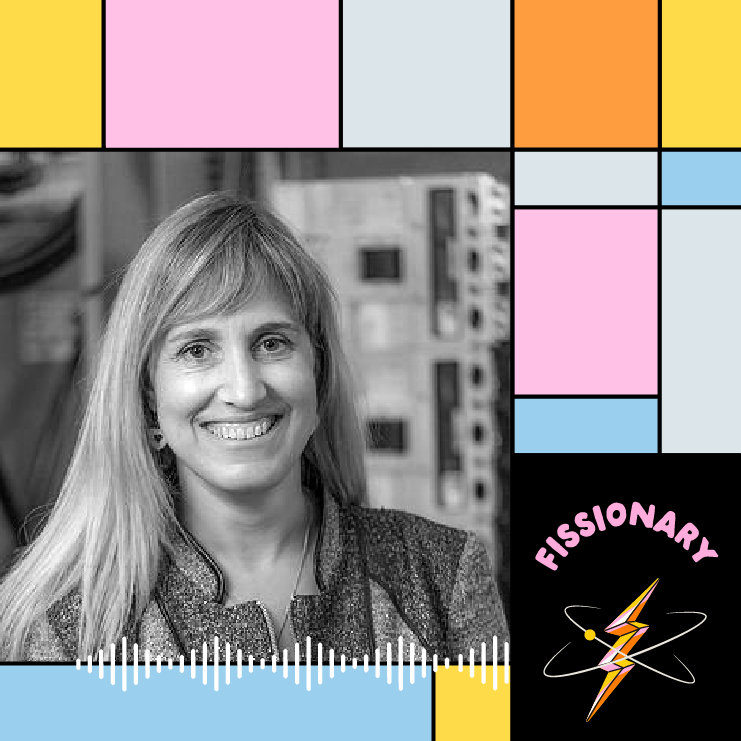
In the season finale of Fissionary, Mary and Jordan sit down with Dr. Tim Gregory, senior nuclear chemist at the UK’s National Nuclear Laboratory and author of Going Nuclear: How the Atom Will Save the World. Tim shares how his journey from cosmochemistry to nuclear science reshaped the way he thinks about energy, progress, and human flourishing. Together, they explore why nuclear power is often misunderstood, how fear of radiation has shaped public perception, and why energy abundance is foundational to everything from healthcare to economic growth.
It’s funny because when I was 16, I got to write an essay as part of a piece of coursework for school. And the title of my essay was, How Does Nuclear Power Work? And Will It Save Us? And so, I guess that question of the power of the atom and what it can do for us has kind of been there for a long time. In a funny way, I feel like I've been writing my latest book, Going Nuclear, for more than half my life really.
Tim talked about how there are endless paths that you can take in science, so even those who are already scientifically inclined might not know how interesting and important the atom is. That means we have a lot of work to do in getting the word out.
I found myself asking, like, why didn't anybody tell me this sooner? Why didn't anyone tell me about the small land footprint of nuclear power? Why didn't anybody tell about the energy density of uranium compared to normal fuels? Why didn't anybody tell me about the importance of energy for economic growth and human progress?
Tim also got into the weeds a little bit about his support for nuclear and the importance of it. He thinks of nuclear as the key to ensuring the abundant energy that we need to power lives around the world.
It sounds like I'm making this up, but I think fundamentally, I'm not pro-nuclear in a sense. I am pro-nuclear, but there's something more fundamental. It's pro-energy abundance. And crucially, if that energy abundance is sustainable.
If you want to make sure we have enough energy on this planet for day-to-day life, if you want that energy to be clean, or if you’re just interested in science, then this is the episode for you!
Tim Gregory I found myself asking, like, why didn't anybody tell me this sooner? Why didn't anyone tell me about the small land footprint of nuclear power? Why didn't anybody tell about the energy density of uranium compared to normal fuels? Why didn't anybody tell me about the importance of energy for economic growth and human progress?
Mary Carpenter This is Fissionary, a show exploring how nuclear powers your world. I'm Mary Carpenter.
Jordan Houghton And I'm Jordan Houghton. Let's jump in.
Mary Carpenter Welcome to the season 5 finale of Fissionary. Can you believe we're at the end of season five?
Jordan Houghton I can't believe it. We've wrapped another season. This season has been so exciting.
Mary Carpenter I've loved this season. We've talked about so many things that I love in combination with nuclear. We've had a ton of amazing guests talking about everything from Disney, to saving the world from disease-carrying mosquitoes, to seeing nuclear through children's eyes, it's been really fun.
Jordan Houghton This has been a great season, and I feel like this episode, our guest today, Dr. Tim Gregory, is the perfect way to wrap up the season. He wrote a book that touches on so many of the topics we've covered this season, and I feel he is just an embodiment of our theme because he is so optimistic about what the atom can do to change and shape our world for the better.
Mary Carpenter Yeah, he's so optimistic and really shows from medicine, to power, to agriculture, nuclear can do everything, and that really just shows the thread that we've been trying to weave throughout the season.
Jordan Houghton Amazing. Thank you all for being here, and let's jump into this great interview. Dr. Tim Gregory is a senior nuclear chemist at the UK's National Nuclear Laboratory, a science communicator you might have seen on TV or heard on the radio, and the author of the new book, Going Nuclear: How the Atom Will Save the World. He's also done research with NASA, holds a PhD in Cosmochemistry, and somehow still finds time to run the fells of the Lake District when he's not in the lab. Tim, we're so excited to have you with us. Thank you so much for being here.
Tim Gregory Thanks for the invitation. I'm delighted to be here.
Mary Carpenter Yeah, thanks for joining us. And to kick things off, this season, we're asking all of our guests, what powers wonder? So, in your work, especially as someone who shares science with the public, what sparks that sense of wonder for you?
Tim Gregory That's a good question. You know, I don't really remember a time when I wasn't interested in science. It's just something that I've never quite let go of, I guess. I mean, you see it with young kids all the time, don't you? They're interested in everything, turning over rocks, poking things with sticks, turning sand, looking at soil. I was fortunate enough to have a few teachers who kind of encouraged that interest in science and the natural world. And in particular, my mum encouraged that as well, she used to buy me encyclopedias and science books all the time as a kid, and so I guess—I guess I was lucky enough to never lose that interest, which is why I'm a scientist at my day job now.
Jordan Houghton So you wear a few hats, because including nuclear chemist, you're also a science communicator and now an author. How do you usually describe the work you do?
Tim Gregory I always say I've got two jobs, I've got my day job where I work in a lab, where I've got my hands in a fume hood working with all sorts of interesting samples and all sorts of interesting instruments from gamma ray spectrometers all the way to mass spectrometers and all of the interesting science that feeds that. And then I've got this, kind of this other life outside of the lab that I actually do in my spare time before work and after work and often on a weekend as well, which is kind of the more public-facing science communication. Lovely conversations like this and the writing as well, my kind of side job as an author. It's very time-consuming, especially kind of trying to keep my mind fresh and my eye on the ball at work with the day job as well. But it's great fun and especially this year with Going Nuclear coming out. It's just taken on a whole life of its own. It has been awesome!
Mary Carpenter So you're doing so many things. You work at UK's National Nuclear Lab, you've also done everything from cosmochemistry to NASA internships. How has your view of the atom and its potential changed over time?
Tim Gregory You know, it's funny because when I was 16, I got to write an essay as part of a piece of coursework for school. And the title of my essay was, How Does Nuclear Power Work? And Will It Save Us? And so, I guess that question of the power of the atom and what it can do for us has kind of been there for a long time. In a funny way, I feel like I've been writing my latest book, Going Nuclear, for more than half my life really. It's just taken me a while to actually get it down on paper. And one of the things about being a scientist is that there are so many interesting fields of science, and ultimately you have to choose something. You know, atoms are small and they're absolutely everywhere. They're quite easy to miss, but one of the nice things about working in a nuclear lab is that you get to think about them all the time. It never ceases to amaze me that the frisk probes that we use at work to measure alpha and beta radiation, each one of those clicks is an individual atom being detected by something that is no bigger than a shoebox, this detector, and yet it can detect a single, single alpha particle or a single beta particle. You know, I don't always think of those terms in work of course, because, you know, if you if you're handling nitric acid and all that kind of thing you have to concentrate and keep your eye on the ball but it is kind of fun to step back and think about what you're actually doing. And so, yeah, those atoms they kind of do really fire the imagination, I suppose.
Jordan Houghton So you mentioned that you almost feel like you've been writing your book, which is called Going Nuclear: How the Atom Will Save the World, for half your life. But what made you want to take this from lab work to the public page, and why now?
Tim Gregory I did my PhD in Cosmochemistry, measuring the age of the solar system using radioactive decay inside meteorites, and although that sounds totally, totally different to what I do for a job now, which is as an analyst in a laboratory, a nuclear lab, it was really the tools and the kind of the underpinnings of radioactive dating that were perfectly transferable to my current job. So, I felt like when I moved over into the nuclear industry, there was a huge amount of learning to do and a lot of catching up to do. And so, I just kind of read everything that I could get my hands on and asked everybody that I worked with about what they did and how it worked. And I found myself asking, like, why didn't anybody tell me this sooner? Why didn't anybody tell me about the small land footprint of nuclear power? Why didn't anybody tell me about the energy density of uranium compared to normal fuels? Why didn't anybody tell me about the importance of energy for economic growth and human progress? All these things kind of came together on this steep learning curve when I moved into the nuclear industry. And maybe it's one of the advantages of being a little bit of an outsider and moving into a new industry a little bit later on in your career, is that you kind of ask the obvious questions. And one of questions that I was kind of thinking was, why are we even talking about decarbonization with the level of urgency that we're talking about it now, when the technology to solve that problem has been around for the last 70 years? It just seems like such an obvious question, and to me—and to thankfully an increasing number of people, it seems like such an obvious technology to help us decarbonize our energy systems without undermining economic growth and the human flourishing that comes with energy abundance. And so, I just thought I'd got to do something to kind of get this message out there, and I guess that was the initial spark that ultimately led to Going Nuclear.
Mary Carpenter That's awesome. How has the book been received? How's it going?
Tim Gregory You know what, it's gone down really well. When I sent it off to the printers, you know, it'd been, like, my life for the better—well, it was just over two years it took me to write it. It was just, like, my obsession. And then it went off to printers and then there's that couple of months before it comes out where you don't have anything to do. And you're wondering, like, what are people going to think of this? And so, I was braced for kind of an angry flood of emails, but you know what, it never arrived. The response has been overwhelmingly positive. And even with the people who were previously, or maybe even still a little unsure about nuclear power, it hasn't been met with kind of aggression or vitriol or anger. I would say the overwhelming response has been curiosity, which is exactly, kind of, what I intended. I wrote Going Nuclear to be one part of an ongoing conversation about nuclear's role in society, I didn't write it to be the full stop at the end of a sentence. And so, I'm actually really glad that it's kind of, it sparked questions and conversations. And I've, you know, one of the best things, I've had—I've had so many emails from people saying that before they were really kind of anti-nuclear and they thought that it was really polluting and really dangerous and after reading Going Nuclear, it kind of changed their mind. And so, that's just that's just like the best thing ever. I mean, it's really nice talking to people who already agree with you, and that's great, it's definitely got its place, but I think it's in many ways, even more rewarding talking to people who were total skeptics before, and now they're kind of on board with the whole thing.
Jordan Houghton That's really great to hear.
Tim Gregory Yeah.
Jordan Houghton And I think it points to the sort of tide change that we're seeing where public opinion is really moving very much in favor of nuclear all over the world, even in places where it wasn't historically as high.
Tim Gregory Totally. Yeah, I think that, you know, it's only been a couple of years since the phrase ‘net zero’ has been coined, and it's been, like, just about six years now since the UK first enshrined net zero in law. So, it hasn't actually been that long. When you kind of zoom out, you know, energy systems, they take decades to change and public opinion, that can take decades as well.
Jordan Houghton Sure.
Tim Gregory And I think that the penny is dropping. That—if we want to clean up our act when it comes to energy, but we also want to enjoy energy abundance and energy reliability, which our technological societies fundamentally depend on, it's going to take more than building wind turbines and solar panels. And they're great technologies for getting us started, but they're not going to be enough on their own. And so, I think that that penny is very, very slowly dropping, which perhaps at least partly explains this kind of vibe shift, because I've noticed that, too. Definitely. Even during the course of my writing Going Nuclear, there seems to be a vibe shift around nuclear for the better.
Jordan Houghton You've called the atom one of the greatest tools we've ever discovered. What do you personally find most awe-inspiring about it scientifically or emotionally?
Tim Gregory I guess scientifically, I remember when I was about—I was in year eight, which in the UK is, like, age 12 and 13, something like that, and that's when we really started learning about the periodic table in classrooms. But I do vividly remember thinking, like, I'm never going to understand any of this. This is just so complicated. This is, like, really grown up science! And so, I don't know, there was something about the idea of atoms. It's just such a simple idea, isn't it? It just explains so much. It's such a brilliant, brilliant, brilliant idea. And then when it kind of dawns on you that the absolute complexity of the Earth and the solar system and the galaxy and the universe, at least the chemical part, the bit that we can see, all of that complexity can be distilled down to just that hundred or so tiles arranged so orderly and so beautifully on the periodic table. It's just a really, really, really elegant and beautiful piece of science. And so, I guess that's why they interest me kind of scientifically. Practically, though, you know, understanding atoms and understanding the chemical elements is one of the things that underpins the modern world, whether it's the behavior of silicon and phosphorus and germanium in the computer chips that power our technology, or indeed the uranium that—at least I think, and thankfully other people think—should be a big part of our energy future. All the carbon and the hydrogen and the oxygen and the nitrogen and the phosphorus and the other little bits and bobs that go together to make all the drugs that improve billions of people's lives around the world every year and are extending our lifetimes all the time, and understanding the chemistry of these simple building blocks and turning that knowledge into new technologies I think is one of the great stories of the 20th century. And thankfully, at least so far, overall, it's something that we've continued in the 21st century as well. And so, it's just kind of a really nice case in point of why understanding nature can help improve not just the planet, but also progress humanity too.
Mary Carpenter So, you've made the case that nuclear is essential to solving some of our biggest challenges. You touched on this a little bit already; things like climate to energy security. What excites you most about this and what do you think the biggest opportunities are?
Tim Gregory So, it sounds like I'm making this up, but I think fundamentally, I'm not pro-nuclear in a sense. I am pro-nuclear, but there's something more fundamental. It's pro-energy abundance. And crucially, if that energy abundance is sustainable. And I think that's what excites me most about nuclear power, because energy is absolutely essential to basically everything that makes the modern world, whether it be our transportation systems, our house heating that we have a lot of in the UK, air conditioning in summer, the energy that we need to grow economies and fund public services, health care, education, all of these things that we value in the modern world, energy is absolutely fundamental to them. And I guess it's a difficult square to circle. How do we harvest the energy we need for a flourishing society without wrecking the environment in the meantime? I think squaring that circle, solving that problem, is one of the great challenges of the 21st century. And nuclear offers a way in which we can do that. We can have the energy that we need, crucially, in the quantities that we need, and reliably we can get it exactly when we need it, but we can have it without the environmental damage from fossil fuels and without the human health impacts of fossil fuels, as well. I think one of the big misconceptions about nuclear power is that it's really bad for people. That is just not supported by the data. This is kind of like an experiment that we've been running now for the last 70 years. In fact, next year is the 70th anniversary of the world's first commercial nuclear power station, which is on the site where I work, Sellafield in the Northwest of England, that's the Calder Hall nuclear power station. And so, this is an experiment that we've been running for 70 years now. In a sense, this isn't new technology. This is old technology that was just never realized to its full potential. And so, I guess that's what excites me most about nuclear power. It's equal part frustrating, but—it's equal parts frustrating and exciting. It is frustrating because we've had the solution to climate change since before we knew about climate change, but it is very exciting in the sense that we've got the solution to climate change—now let's get on and implement it!
Jordan Houghton You talked a little bit about people viewing nuclear energy as dangerous, and I want to talk a little about radiophobia—
Tim Gregory Ah, yes!
Jordan Houghton —which you've said can be more dangerous than radiation itself. And I agree with you. I think if you're in this space and you understand it, everyone's in agreement for—but for our listeners who don't know as much about it, tell them a little bit about how you view it.
Tim Gregory Okay, so radiophobia is the irrational fear of radiation. It's something that's reinforced in movies, computer games, TV series. The message is reinforced all the time: radiation is bad news. And so, I'm not surprised that people have this view of radiation. And I think, often, people kind of get it in their minds that this radiation question, this radiation phantom, is a reason not to pursue a nuclear-powered future. But again, when you kind of take a sober look, and you step back and look at the literature, you find that the amount of radiation that people are exposed to as a consequence of nuclear power is negligible. It's kind of right down in the decimal points of the background radiation that we're all exposed to all the time. Everybody listening to this podcast right now and every second of their life that they're exposed to, all the time, just by existing on planet Earth. And so, it's not surprising that people kind of feel that gut—that gut fear of radiation, but actually almost every single time, it's completely unwarranted. And even me—so, I work in a lab that's on Europe's biggest and oldest nuclear site, Sellafield, and I work hands-on with most of the periodic table, a lot of which is radioactive. And I wear a dosimeter at work that measures how much radiation I'm exposed to. And because I'm kind of interested in these things, and that I'm quite a spreadsheet geek as well, I always ask for my dosimetry data at the end of the year, and on average, I'm exposed to 0.3 millisieverts of radiation every year at work. And for context, the UK average is 2.4 millisieverts, and so, it's like, it's barely a 10 percent increase. And if I were to live somewhere like Colorado, which is the state with the highest background radiation, or Finland, which is the European country with the highest background radiation, I would be exposed to something like seven or eight millisieverts per year. So, even me, like, I'm perhaps a good experiment for this, working on Europe's biggest nuclear site. The amount of radiation that I'm exposed to is absolutely negligible, so it's nothing to worry about. And kind of exactly like you said, that fear of radiation is often far more dangerous than the radiation itself. A recent example that illustrates this point is Fukushima in 2011 when a tsunami hit. The backup pumps went down, a couple of reactors went into meltdown, and three of them exploded and sent radioactive debris into the atmosphere. The amount of radiation that almost all of the affected population was exposed to as a result of Fukushima was kind of background radiation levels of radiation. It was absolutely nowhere near the amount of radiation you would need for any discernible health effects. And since Fukushima, one person has died as a result of the accident. Even that is contentious, actually, in the literature. There are some researchers that say it was nothing to do with the radiation, there are others that say was, but, you know, it's something like one person has died from the radiation from Fukushima, 2,300 people died from the stress of the evacuation. They were mostly old people who were displaced from care home settings and hospital settings, and the consensus in the literature is that almost all of those evacuations were needless, and in hindsight, they shouldn't have happened. And looking at kind of the longer-term consequence of Fukushima, Japan actually shut down all of its nuclear power stations after Fukushima. It has since started some up but it did wind them all down in the years that followed Fukushima. But its power demand didn't drop and to make up that shortfall that it lost in nuclear—Japan, by the way, got about a third of its power from nuclear power before Fukushima—that wound down to nothing. And it replaced that nuclear generation with fossil fuels, including coal. And more than 20,000 people died from the air pollution because of that extra coal that Japan burnt to kind of make up the shortfall. And so, that's kind of the thing that I'm talking about when I say that the kind of the instinctive fear and the knee-jerk reaction against radiation is actually more deadly than radiation itself.
Mary Carpenter Let's talk about UK, seems like there's a lot of movement in nuclear. What do you think is the biggest opportunity, and what does the momentum feel like right now around nuclear in the UK?
Tim Gregory The momentum feels good. You know, we had a general election last year, we had a change in government, and both of our major parties are actually strong supporters of nuclear power, which is really good. This summer, we had a new reactor announced, called Sizewell C, which is on the southeast coast of England, and when that's built—by the mid-2030s is kind of the initial estimate, but who knows, it might take longer than that. It's a 3.2-gigawatt reactor. And to put that in perspective for the UK, on our current power demand, which of course are increasing, but with our current power demand it's something like eight or nine percent of the country's electricity. Which is pretty impressive for something that only takes up a quarter of a square mile, actually! Just a really relatively small power station, but kicking out an absolutely enormous amount of electricity. And, more recently, the UK government announced that we're going to be building three small modular reactors on a little island off the north coast of Wales called Anglesey. And I believe that the site is actually big enough to house up to eight. So, who knows? And interesting that the place where it's being built is the site of a former nuclear power station. And it's right next to an old aluminum plant as well. However, if I’m going to, you know, score this situation, the negative points is that when you factor in the reactors that we're shutting down over the next couple of years, we'll have about the same nuclear capacity in 2035 as we did in 2015. And so, it's actually pretty breakeven, it's actually within 0.2 of a gigawatt, so it's almost exactly the same generation. It could be worse. We could have just not replaced those reactors as they shut down and be down nearly nothing. But, you know, the fact that there's political consensus, I think there's a growing public acceptance of nuclear power, to me this says that we should be aiming higher. And, you know, to—I guess, to see a really nice example of a country that did that, we in the UK just have to look across the Channel at our second-closest European neighbor after Ireland, and that's France, which, I guess one of the reasons it's famous is its amazing nuclear power program back in the 70s, 80s, and 90s, which at its apex generated 80 percent of France's electricity, which is just absolutely astonishing. France almost decarbonized its grid by accident before the public started caring about climate change. And so, with this added motivation to clean up our energy systems and pollute less, I mean, it just kind of makes you think what's possible now with the added motivation of phasing out fossil fuels. And, I should just say as well, that although France—it's only built a couple of reactors since the year 2000, it's still got the second cleanest electricity in Europe despite the fact it's got barely any wind and solar in its grid and it doesn't actually have that much hydro either. I'd love the UK to do something similar, but you know, things could be going worse!
Jordan Houghton Love France for nuclear and croissants.
Tim Gregory Oh, absolutely, yes!
Mary Carpenter And cheese!
Jordan Houghton And cheese, and wine. What a model!
Tim Gregory France is great.
Jordan Houghton So what do you see as the biggest opportunity or the biggest need for the UK to do next?
Tim Gregory We're aiming for, I think the latest target is a 95 percent carbon-free electricity grid by 2030, which I think is probably a little bit ambitious. I mean, 2030 is not far away, is it? And then full net zero, so across our entire energy system by 2050. Before I wrote Going Nuclear, I honestly didn't think it was possible. I thought, it's a really noble thing to be aiming for, but get real. Fossil fuels are kind of—they're the world order, like, the modern world is built on the energy that we get from fossil fuels. I just thought there's just no way that we'd be able to do that without massive collateral damage, namely energy scarcity and the, kind of, the economic stagnation that would result from that. Since writing Going Nuclear, I'm actually fully convinced that net zero is definitely, definitely possible. I guess that's the opportunity for the UK, and, you know, again, like, next year, it's the 70th anniversary of the world's first commercial nuclear power station. It was only really small, you know, just a couple of hundred-megawatt reactors, there were four of them. But to me, that implementation of nuclear technology in the domestic electricity grid, I mean, the area where I live now was one of the first places in the world to be powered by a nuclear reactor. It's just amazing. I'd kind of love to galvanize that spirit of particularly the 1960s when nuclear power was the future. I mean, I read, like, articles from the time by a lot of the great scientists from back then, like Glenn Seaborg, for example. I mean, it was just kind of assumed that nuclear power was going to be the major source of energy for the world by now, really. In a sense, nuclear technology, again, is old technology that was never fully realized, and so, I'd love the UK to kind of go all in and do a French-style nuclear rollout. Not just the UK though, I don't see why lots of other countries couldn't do that as well. It's been done before. And so, the science, and the technology, and the engineering is there, and there's a precedent for it. Now it's time to implement it with kind of the vigor, and the spirit, and that rational and daring optimism that we spoke about earlier.
Mary Carpenter I love to see how optimistic you are. So, when you're trying to connect with someone who's not as optimistic, or even skeptical, what do you do to help them see what you see?
Tim Gregory I love talking about the science. I absolutely love it. But it's turning that science into technology and implementing it in society through sound policy. All of the things that that enables. I do try and make the point that I'm not fundamentally pro-nuclear, that's kind of putting the cart before the horse. It's energy abundance that I am in favor of. I don't really care where it comes from. So long as there's lots of it and it's reliable, people can afford it, and we don't wreck the environment in the process. I just happen to think that nuclear fission is the best way that we can do that. It's kind of, I guess—it's kind of going beyond nuclear power and talking about what it means for ordinary people just out there in the world, because although, you know, I spend a lot of time reading about this and talking about it, most people are not interested in energy. They just want to be able to flick their lights and they come on in the house, or they just want be able start their car and drive somewhere. And that's absolutely fine. We all have our own interests. I guess it's kind of framing—framing the situation in a way that kind of appeals to people, and because an energy is not just, like, another kind of good that we might make and trade and consume. It's not like croissants or French cheese or something like that where, you know, the world would be a poorer place without those things, but we could live without them. We can't live without energy. It's absolutely fundamental to everything, and so I guess it's kind of meeting people where they are.
Mary Carpenter Not totally sure I could live without cheese!
Jordan Houghton I know, I was just gonna say, speak for yourself, Tim, I personally cannot live without cheese.
Tim Gregory Yeah, fair enough.
Jordan Houghton I want air conditioning, I want cheese. I want it all.
Tim Gregory You can have those with nuclear!
Mary Carpenter Yeah, exactly!
Jordan Houghton Okay, last question. Is there a person, place, or thing that has left you in awe recently?
Tim Gregory Yeah, so two things come to mind. So, the first one, I got married this year, and for our honeymoon, we did a big road trip in the southwest of the US, and we visited the Grand Canyon. And that was just one of the most amazing things that I've ever seen in my life. It's huge! Nothing quite prepares—it doesn't look real. It’s like, your brain can't comprehend how big the Grand Canyon is. And it was actually on my birthday. We walked all the way from the top of the South Rim all the way down to the Colorado, and touched it, and then walked back up, and it was just amazing.
Mary Carpenter Wow!
Jordan Houghton Wow.
Tim Gregory Totally awe-inspiring. And more recently, so, kind of outside of science and writing and all of this nuclear and energy stuff, I love music and recently went to see Rachmaninoff's piano concerto being played by the Liverpool Philharmonic Orchestra. And, you know, there's just something about live music. I think especially classical music. There's something transcendent about it. I don't know why, it just sends shivers running down your spine, and it's so elevating and awe-inspiring. It's like, decades and decades of work comes down to playing that piece of music. And it just got me thinking afterwards, humans have a lot of potential, and I think sometimes we sell ourselves short, we're too harsh on ourselves, but we are actually capable of doing amazing, amazing things, whether it's playing beautiful pieces of classical music, or building lots and lots of nuclear reactors to give the energy to society that we need.
Jordan Houghton That's actually a beautiful note to end it on.
Mary Carpenter Well, thank you so much for joining us. This was so interesting, thank you!
Tim Gregory My pleasure, thank you very much.
Jordan Houghton Incredible episode. Tim, thank you so much for joining us and sharing your optimism with us and our audience today. This has been so much fun. I also feel horribly out of shape because I think I would die if I had to hike down and then back out of the Grand Canyon.
Mary Carpenter Yeah, if you asked me the finale question, what are you in awe of? That was what I would say. They hiked up and down the Grand Canyon. That is so hard!
Jordan Houghton I can't believe it. Also because like just mad props for that being a honeymoon activity you want to do because in my mind, it's like, just laying out and not doing much of anything. That's such a cool trip. I think that's—I think that's awesome that they did it.
Mary Carpenter I know. I wonder how long it took them, I wish I would have asked.
Jordan Houghton I didn't ask. Tim, leave us a comment if you hear this. Tell us, did you have to, like, camp at the bottom? Did you do it all in one day? We missed out on asking that. I was too stunned.
Mary Carpenter We need more details! The people need information. We took a van up and down the Grand Canyon, and that was even kind of scary.
Jordan Houghton I've known people that have done, like, the donkey ride?
Mary Carpenter Oh, we saw those! Yeah, wouldn't do that either. Nope.
Jordan Houghton No, thank you!
Mary Carpenter Yeah. It is a special place, though. It definitely goes well with the theme of powering wonder.
Jordan Houghton Yeah, for sure. We'll be back soon with a new season. But if you haven't already, you can follow us at nei.org for updates so you never miss an episode. Thanks so much for tuning in, and we'll see you soon.
That’s a wrap on Season 5 of Fissionary—keep your eyes peeled for news on Season 6!