
Newsroom Archive

Testifying before New Jersey’s Board of Public Utilities that is considering how best to implement the new zero-emission credit law, NEI President and Chief Executive Officer Maria Korsnick congratulated New Jersey for being in a “vanguard of states” that have recognized the vital role that nuclear energy plays in a clean energy future.

In the wake of Hurricane Michael, nuclear power plant operators in the affected region continue working hard to keep their communities safe and powered. As the hurricane passed through Florida, Alabama and Georgia, operators implemented their well-rehearsed emergency response plans.

NEI's members are working hard to keep their communities safe and powered in the wake of Hurricane Michael.
The Pentagon is exploring the potential for the deployment of micro-reactors at its defense installations. The Nuclear Energy Institute has released a Roadmap on what steps are needed for deployment.

The nation’s nuclear energy industry strongly benefits U.S. national security, energy security and international trade, a gathering of current and retired admirals of the U.S. Navy affirmed this week. Speaking at a symposium at the Center for Strategic and International Studies on Oct. 2, former Vice Chairman of the Joint Chiefs of Staff Adm. James Winnefeld Jr. said the nuclear navy relies on the industrial capabilities of the commercial nuclear industry.

“Micro-reactors” are one class of innovative nuclear technologies whose particular attributes hold out special promise to the nation’s largest energy user—the United States military. NEI's new roadmap lays out the actions needed to ensure the successful deployment of the first of these at a domestic military base by the end of 2027.
President Trump has announced his intention to nominate Dr. Rita Baranwal to head DOE's Office of Nuclear Energy.

Bob Perciasepe, president of the Center for Climate and Energy Solutions’, joins Monica Trauzzi for the fourth episode of “Off the Menu” in Washington, D.C.’s Georgetown neighborhood

President Donald Trump late last week signed into law bipartisan legislation that seeks to eliminate some of the financial and technical barriers to bringing advanced nuclear reactors to market in the United States.
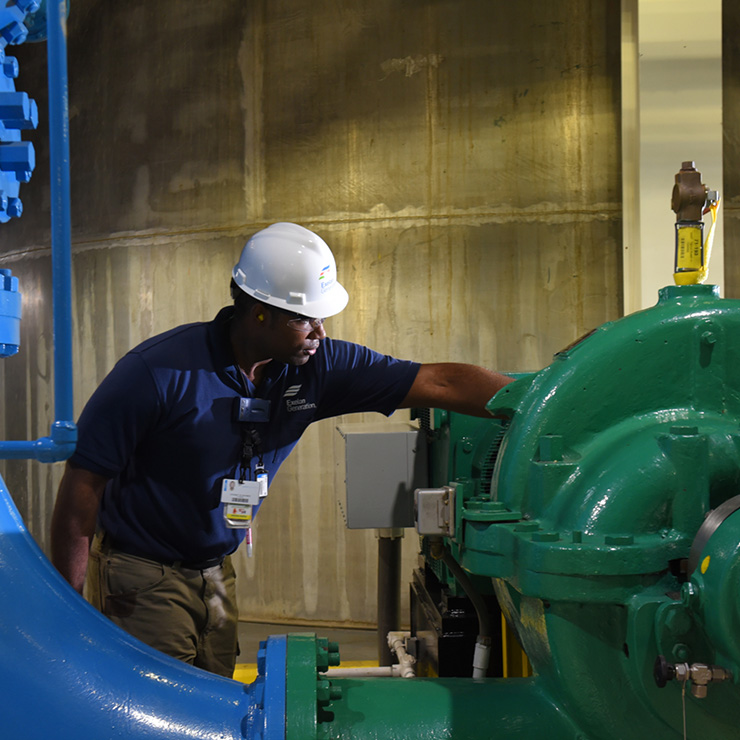
Andrew Winter, a senior manager of equipment reliability at Exelon Nuclear, has a unique occupation: he oversees maintenance schedules for the critical equipment that keeps nuclear power plants running safely and reliably. Winter oversees the maintenance strategy, including preventive maintenance programs, for 22 Exelon reactors at 13 sites. From water pumps to air compressors to power supplies, Andy and his team are responsible for inspecting and maintaining literally thousands of components per plant.

NuScale Power's selection of BWXT to begin optimizing the engineering design of NuScale's SMR for manufacture signals the company's move into the manufacturing phase and the company’s attention to optimizing fabrication processes and containing first-of-a-kind construction costs.
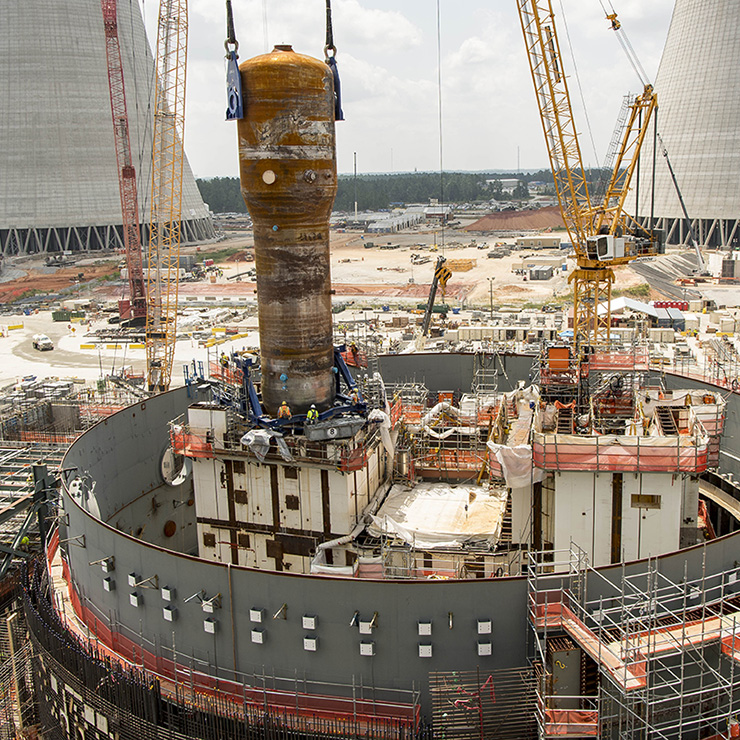
In a unanimous vote crucial to the future of the only nuclear power plant construction project in the United States, all four co-owners of the two Westinghouse AP1000 nuclear reactors being built at Georgia Power’s Vogtle site in Waynesboro, Georgia, agreed this week to continue the project.